Records Management and Information Systems for Efficient Offices
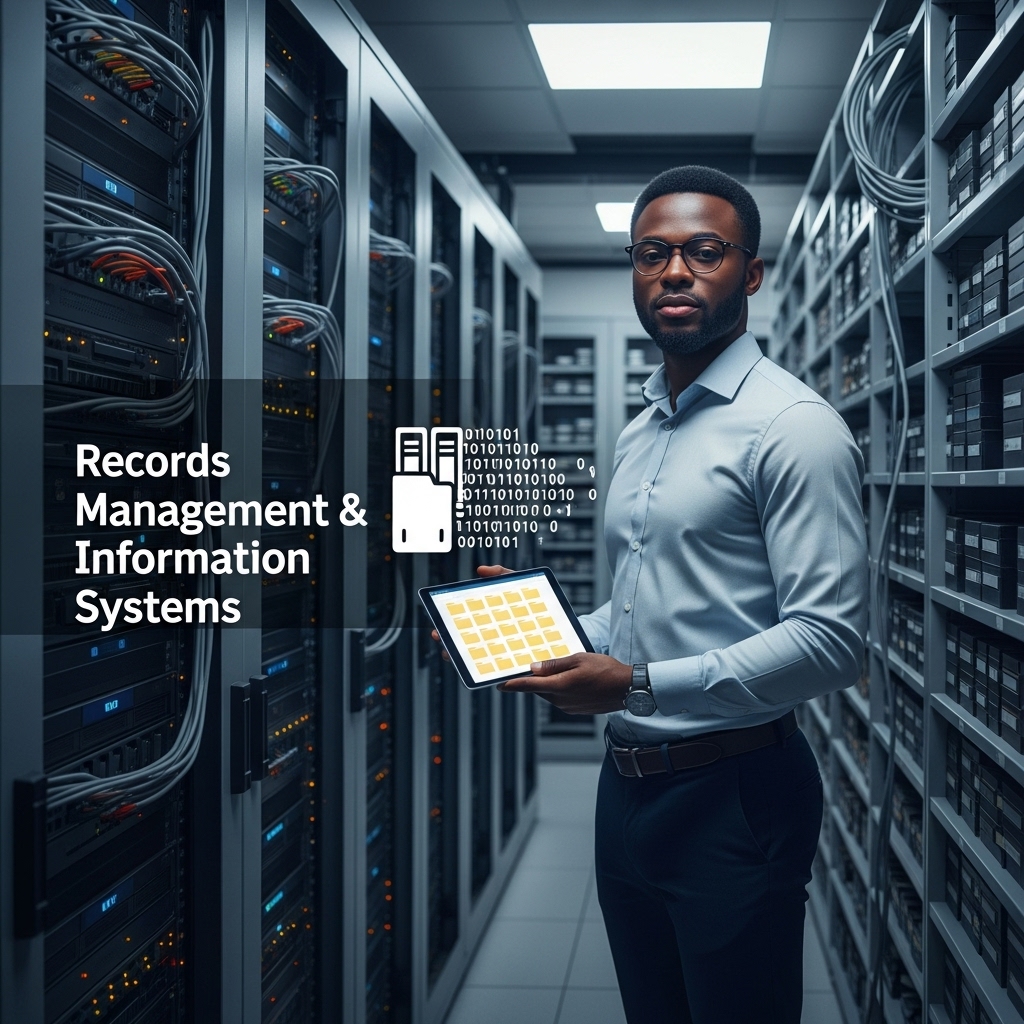
RECORDS MANAGEMENT AND INFORMATION SYSTEMS FOR EFFICIENT OFFICES
RATIONALE In the information age, data is an organization’s most valuable asset—but only if it can be found. A chaotic filing system is not just an annoyance; it is a liability. Lost files, data breaches, and non-compliance with retention laws can cost organizations millions in fines and legal fees. Yet, many offices still rely on archaic paper trails or disjointed digital folders that make information retrieval a nightmare.
Transitioning to effective electronic records management is no longer optional. It is the backbone of operational efficiency. When information flows seamlessly, decisions happen faster, and productivity soars.
This training programme bridges the gap between traditional archiving and modern digital systems. It equips administrative professionals with the frameworks to organize, secure, and digitize their records, ensuring that the right information is available to the right people at the right time.
OVERALL OBJECTIVES By the end of the programme, participants will be able to:
-
Design and implement a robust records management policy.
-
Oversee the transition from paper-based to electronic records management systems.
-
Classify, index, and retrieve documents with speed and accuracy.
-
Ensure compliance with data protection laws and retention schedules.
-
Protect sensitive organizational information from unauthorized access.
-
Develop a disaster recovery plan for critical business records.
COURSE CONTENT
Day One: Fundamentals of Records Management
-
The Records Lifecycle: Creation, Maintenance, Use, and Disposal
-
Distinguishing between “Records,” “Documents,” and “Data”
-
The cost of poor record-keeping: Legal and operational risks
-
Establishing a file plan and classification scheme
-
Standardization: Naming conventions and version control
Day Two: Classification and Indexing Systems
-
Alphabetic, Numeric, and Alphanumeric filing systems
-
Subject-based classification: Building a functional taxonomy
-
Metadata: The key to searchability in digital systems
-
Managing active vs. inactive records
-
Archiving strategies for physical records
Day Three: Digital Transformation and Automation
-
Introduction to Electronic Document Management Systems (EDMS)
-
Scanning and digitization best practices (OCR, PDF/A)
-
Workflow automation: Reducing manual data entry
-
integrating email and social media records
-
Cloud storage vs. On-premise solutions
Day Four: Security, Privacy, and Compliance
-
Understanding Data Protection Acts and GDPR implications
-
Information security: Access controls and encryption
-
Managing confidential and classified information
-
Retention schedules: When to keep and when to destroy
-
Secure disposal of physical and electronic records
Day Five: Policy and Disaster Recovery
-
Writing a comprehensive Records Management Policy
-
Business Continuity Planning: Protecting records from disaster
-
Auditing the records management function
-
Change management: Getting staff to buy into the new system
-
Group Project: Designing a digitization roadmap
METHODOLOGY The training will be delivered using interactive and practice-oriented learning approaches, including:
-
Expert-led presentations on electronic records management
-
Hands-on digitization workshops
-
Software demonstrations (EDMS concepts)
-
Case studies of data breaches and loss
-
Policy drafting exercises
TARGET AUDIENCE This programme is suitable for:
-
Records Managers and Archivists
-
Office Managers and Administrators
-
IT Support Staff involved in data management
-
Compliance and Information Officers
-
Secretaries and Executive Assistants
MODE OF ASSESSMENT Participants will be assessed through:
-
Developing a file classification scheme
-
Drafting a records retention policy
-
Case study on disaster recovery
-
Certificates of participation will be issued upon successful completion.
FEES Training fees are charged per participant and are inclusive of:
-
Training materials
-
Resource documentation
-
Certificate of participation
-
Refreshments (where applicable)
-
Detailed fee structure available upon request.
VENUE The programme can be delivered at:
-
AYU GLOBAL–approved training centres
-
Client-designated venues
-
Virtual or hybrid platforms, where applicable
DATE To be scheduled in consultation with participating organizations.
DURATION Five (5) Days
CAPABILITY STATEMENT AYU GLOBAL INTERNATIONAL is a leading management and capacity development consulting firm with expertise in:
-
Electronic records management and digitization
-
Information governance and security
-
Business process automation
-
Institutional capacity building
-
Strategic leadership and project management
The firm has successfully delivered training and advisory services to government institutions, regulatory agencies, private sector organizations, and development partners.
FACULTY / RESOURCE PERSONS The programme will be facilitated by seasoned professionals with expertise in:
-
Information Science and Archival Studies
-
Cyber Security and Data Privacy
-
IT Systems Administration
-
Legal Compliance
-
Library Sciences
CONCLUSION Information is power, but organized information is improved performance. This programme transforms your records from a cluttered burden into a streamlined asset. AYU GLOBAL INTERNATIONAL is your partner in building an efficient, future-ready office.
Instructor

You May Like
AI for Business Decision-Making and Automation
Give your leadership team the power of "super-speed" decision-making. Scale your output without scaling your headcount.
Introduction to Artificial Intelligence and Applications
RATIONALE Artificial Intelligence is the defining technology of the 21st century, impacting every sector from healthcare to finance. Understanding Artificial Intelligence applications is essential for...

Digital Transformation Strategy and Implementation
We cover the roadmap for legacy system migration, digital culture adoption, and customer experience innovation. Transform or die.

Fundamentals of Planning, Research and Data Analysis
FUNDAMENTALS OF PLANNING, RESEARCH AND DATA ANALYSIS RATIONALE In the information age, data is the new currency. However, raw data is useless without the skills...
Applied Research Methods for Decision-Making
This course teaches you the scientific method of business decision-making. Learn how to design surveys, conduct market research, and validate your assumptions before you spend...