
Advanced Accounting Practices and Standards
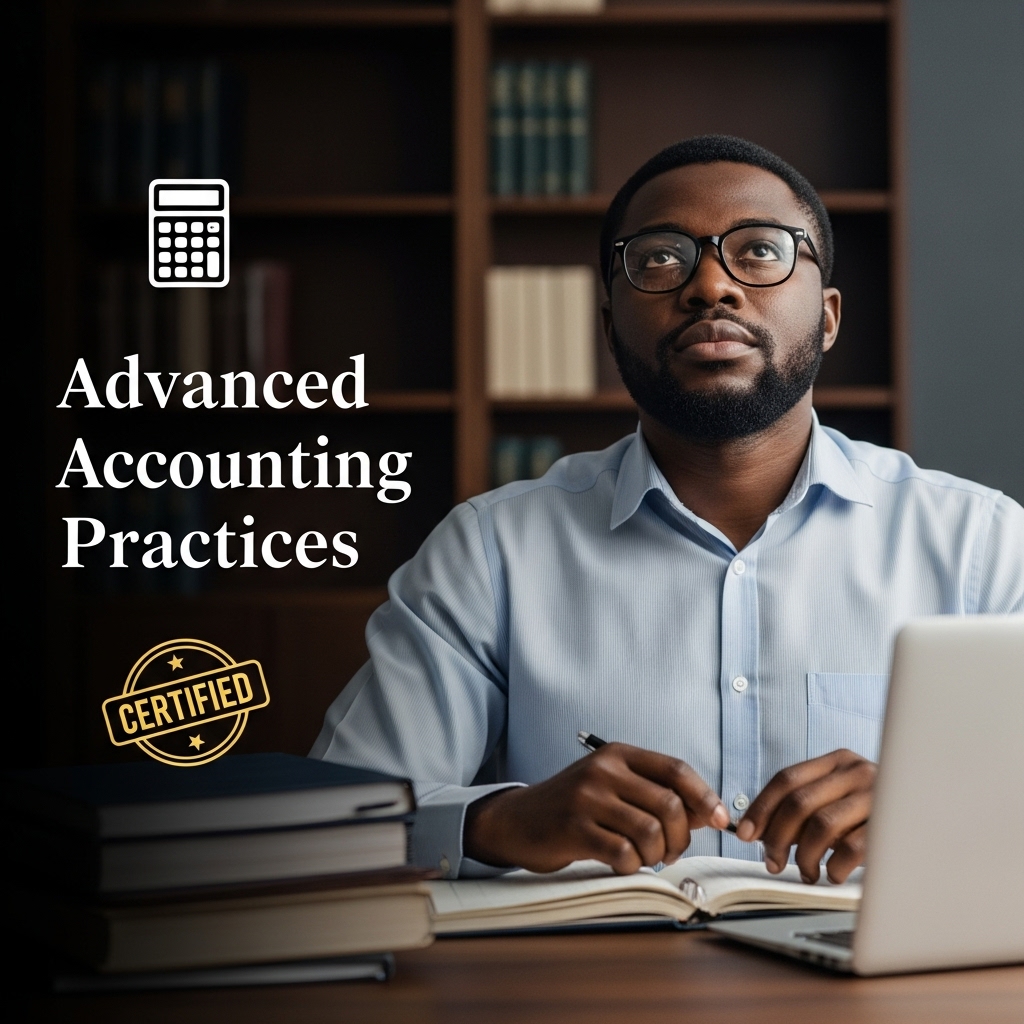
ADVANCED ACCOUNTING PRACTIC
RATIONALE In a globalized economy, financial reporting is the universal language of business. However, the rules of this language—specifically International Financial Reporting Standards (IFRS)—are constantly evolving. Reliance on outdated knowledge or simplified accounting treatments is a significant risk. It leads to material misstatements, regulatory fines, and a loss of investor confidence.
Advanced accounting practices and standards are not just for technical experts; they are essential for any finance leader who needs to present a true and fair view of their organization’s performance. Complex transactions like mergers, financial instruments, and revenue recognition require sophisticated judgment, not just rote calculation.
This training programme bridges the gap between basic bookkeeping and high-level financial reporting. It dives deep into the most challenging areas of IFRS, equipping participants with the expertise to handle complex accounting issues with precision and compliance.
OVERALL OBJECTIVES By the end of the programme, participants will be able to:
-
Apply advanced accounting practices and standards (IFRS) to complex business transactions.
-
Account for business combinations, consolidations, and joint arrangements accurately.
-
Manage the complexities of revenue recognition under IFRS 15.
-
Handle financial instruments, including hedging and impairment (IFRS 9).
-
Prepare consolidated financial statements for groups with foreign subsidiaries.
-
Disclose financial information that meets the highest standards of transparency.
COURSE CONTENT
Day One: The Framework of Modern Reporting
-
The Conceptual Framework for Financial Reporting
-
Fair Value Measurement (IFRS 13): Techniques and hierarchy
-
Presentation of Financial Statements (IAS 1): Beyond the basics
-
Accounting Policies, Changes in Estimates, and Errors (IAS 8)
-
First-time Adoption of IFRS (IFRS 1)
Day Two: Group Accounting and Business Combinations
-
Business Combinations (IFRS 3): Acquisition method and goodwill
-
Consolidated Financial Statements (IFRS 10): Control assessment
-
Accounting for Associates and Joint Ventures (IAS 28 / IFRS 11)
-
Non-controlling interests and step acquisitions
-
Disposal of subsidiaries and loss of control
Day Three: Revenue and Leases
-
Revenue from Contracts with Customers (IFRS 15): The 5-step model
-
Handling variable consideration, warranties, and principal vs. agent
-
Leases (IFRS 16): Lessee and Lessor accounting models
-
Identifying a lease and separating lease components
-
Sale and leaseback transactions
Day Four: Financial Instruments and Assets
-
Financial Instruments (IFRS 9): Classification and Measurement
-
Impairment of Financial Assets: Expected Credit Loss (ECL) model
-
Hedge Accounting basics
-
Impairment of Non-Financial Assets (IAS 36)
-
Intangible Assets (IAS 38) and Research vs. Development costs
Day Five: Foreign Currency and Disclosures
-
The Effects of Changes in Foreign Exchange Rates (IAS 21)
-
Functional vs. Presentation currency
-
Translating foreign operations for consolidation
-
Related Party Disclosures (IAS 24)
-
Operating Segments (IFRS 8) and Earnings Per Share (IAS 33)
METHODOLOGY The training will be delivered using interactive and practice-oriented learning approaches, including:
-
Expert-led presentations on advanced accounting practices and standards
-
Complex consolidation workshops (Excel-based)
-
Case studies of IFRS implementation challenges
-
Review of real-world annual reports
-
Technical Q&A sessions
TARGET AUDIENCE This programme is suitable for:
-
Chief Financial Officers (CFOs) and Group Financial Controllers
-
Senior Accountants and Reporting Managers
-
External Auditors and Advisory Consultants
-
Finance Managers in multi-national corporations
-
Academics and Standard Setters
MODE OF ASSESSMENT Participants will be assessed through:
-
Complex consolidation exercise
-
IFRS technical quiz
-
Case study analysis of a financial statement
-
Certificates of participation will be issued upon successful completion.
FEES Training fees are charged per participant and are inclusive of:
-
Training materials
-
Resource documentation
-
Certificate of participation
-
Refreshments (where applicable)
-
Detailed fee structure available upon request.
VENUE The programme can be delivered at:
-
AYU GLOBAL–approved training centres
-
Client-designated venues
-
Virtual or hybrid platforms, where applicable
DATE To be scheduled in consultation with participating organizations.
DURATION Five (5) Days
CAPABILITY STATEMENT AYU GLOBAL INTERNATIONAL is a leading management and capacity development consulting firm with expertise in:
-
Advanced accounting practices and standards (IFRS/IPSAS)
-
Financial reporting and analysis
-
Corporate finance and valuation
-
Institutional capacity building
-
Strategic leadership and project management
The firm has successfully delivered training and advisory services to government institutions, regulatory agencies, private sector organizations, and development partners.
FACULTY / RESOURCE PERSONS The programme will be facilitated by seasoned professionals with expertise in:
-
Chartered Accounting (FCA/ACCA/CPA)
-
IFRS Technical Advisory
-
Audit and Assurance
-
Financial Modeling
-
Corporate Reporting
CONCLUSION Precision in financial reporting is the hallmark of a world-class organization. This programme ensures that your finance team operates at the cutting edge of the profession. AYU GLOBAL INTERNATIONAL is your partner in achieving financial transparency and excellence.
ES AND STANDARDS
Instructor

You May Like

AI for Business Decision-Making and Automation
Give your leadership team the power of "super-speed" decision-making. Scale your output without scaling your headcount.
Introduction to Artificial Intelligence and Applications
RATIONALE Artificial Intelligence is the defining technology of the 21st century, impacting every sector from healthcare to finance. Understanding Artificial Intelligence applications is essential for...

Digital Transformation Strategy and Implementation
We cover the roadmap for legacy system migration, digital culture adoption, and customer experience innovation. Transform or die.

Fundamentals of Planning, Research and Data Analysis
FUNDAMENTALS OF PLANNING, RESEARCH AND DATA ANALYSIS RATIONALE In the information age, data is the new currency. However, raw data is useless without the skills...

Applied Research Methods for Decision-Making
This course teaches you the scientific method of business decision-making. Learn how to design surveys, conduct market research, and validate your assumptions before you spend...