
Fundamentals of Planning, Research and Data Analysis
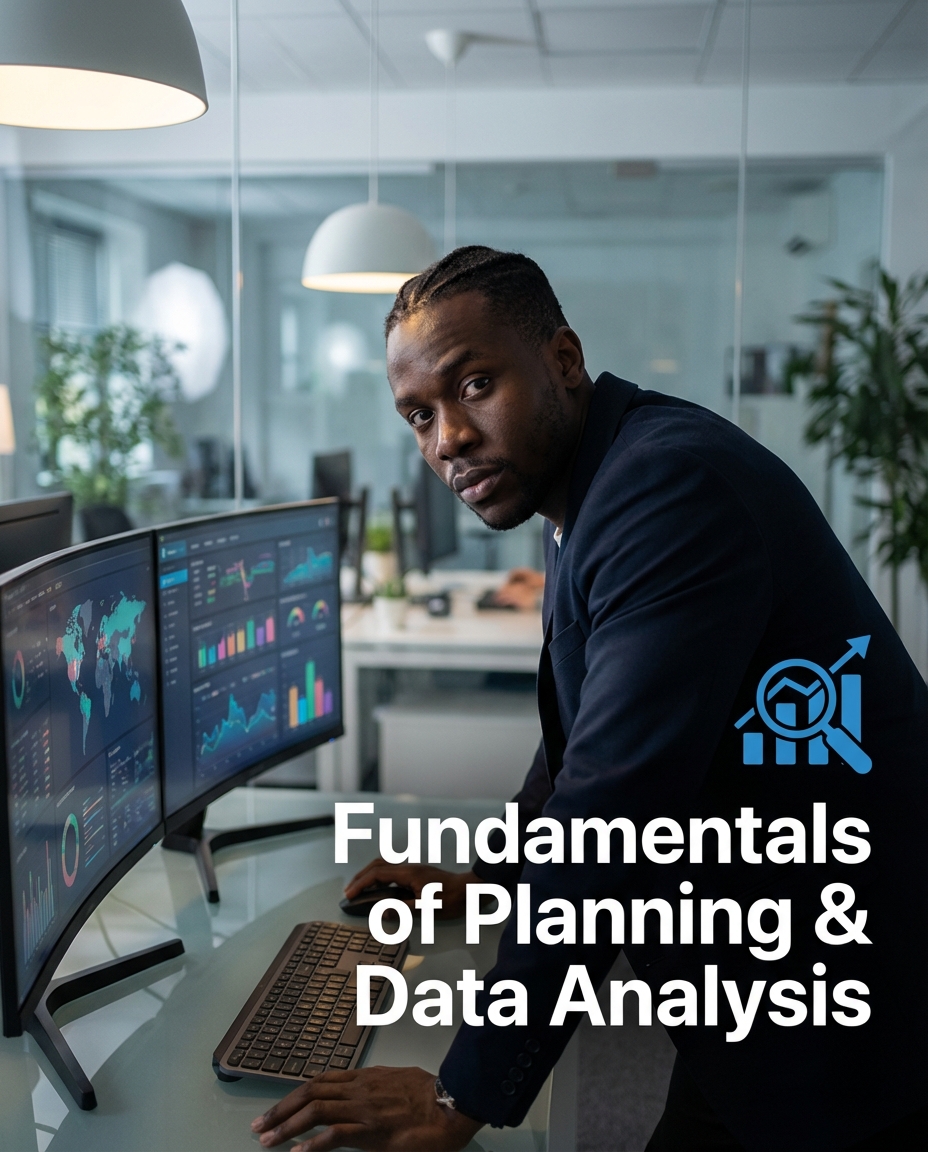
FUNDAMENTALS OF PLANNING, RESEARCH AND DATA ANALYSIS
RATIONALE In the information age, data is the new currency. However, raw data is useless without the skills to extract meaning from it. Research and data analysis are the twin pillars of evidence-based decision-making. whether in public policy, business strategy, or academic pursuit, the ability to plan a rigorous inquiry, collect reliable data, and analyze it effectively is paramount.
Many professionals struggle with “analysis paralysis” or, worse, make critical decisions based on flawed data or intuition alone. This course addresses the gap between data availability and data utility. It provides a structured approach to the entire research lifecycle, from formulating the right questions to presenting compelling, data-driven conclusions.
This training programme is designed to demystify statistics and research methodologies. It focuses on practical applications, ensuring participants can conduct high-quality research and data analysis that stands up to scrutiny and drives actionable results.
OVERALL OBJECTIVES By the end of the programme, participants will be able to:
-
Understand the fundamental principles of research design and planning.
-
Formulate clear research questions and hypotheses.
-
Select appropriate data collection methods (quantitative vs. qualitative).
-
Apply statistical tools for research and data analysis.
-
Interpret complex data sets to identify trends and correlations.
-
Present research findings effectively to stakeholders using data visualization.
COURSE CONTENT
Day One: Foundations of Research Planning
-
Introduction to the research cycle: Planning, Execution, and Reporting
-
Identifying the problem: Formulating research questions and objectives
-
Literature review: Building on existing knowledge
-
Ethical considerations in research and data analysis
-
Developing a robust research proposal
Day Two: Research Design and Methodologies
-
Quantitative vs. Qualitative research: When to use which?
-
Sampling strategies: Ensuring representativeness
-
Designing surveys, questionnaires, and interview guides
-
Case study research and experimental design
-
Mitigating bias and errors in research design
Day Three: Data Collection and Management
-
Fieldwork strategies and logistics
-
Digital tools for data collection (Mobile data collection, ODK, etc.)
-
Data quality assurance and cleaning
-
Organizing and coding data for analysis
-
Data security and privacy protocols
Day Four: Data Analysis Techniques
-
Introduction to statistical concepts (Mean, Median, Mode, Standard Deviation)
-
Using software for research and data analysis (Excel, SPSS, or open-source alternatives)
-
Qualitative analysis: Thematic coding and content analysis
-
Hypothesis testing and inferential statistics
-
Identifying correlation vs. causation
Day Five: Reporting and Visualization
-
Interpreting analysis results for non-technical audiences
-
Data storytelling: Visualizing data with charts and graphs
-
Writing effective research reports and policy briefs
-
Presenting findings to stakeholders
-
Review of participant projects and feedback
METHODOLOGY The training will be delivered using interactive and practice-oriented learning approaches, including:
-
Expert-led presentations on research and data analysis
-
Hands-on exercises with data sets
-
Software tutorials (e.g., Excel for analysis)
-
Group research projects
-
Peer review sessions
TARGET AUDIENCE This programme is suitable for:
-
Policy analysts and government researchers
-
Monitoring and Evaluation (M&E) officers
-
Business intelligence analysts
-
Academic researchers and students
-
NGO and development practitioners
MODE OF ASSESSMENT Participants will be assessed through:
-
Development of a research plan
-
Practical data analysis exercises
-
Presentation of research findings
-
Certificates of participation will be issued upon successful completion.
FEES Training fees are charged per participant and are inclusive of:
-
Training materials
-
Resource documentation
-
Certificate of participation
-
Refreshments (where applicable)
-
Detailed fee structure available upon request.
VENUE The programme can be delivered at:
-
AYU GLOBAL–approved training centres
-
Client-designated venues
-
Virtual or hybrid platforms, where applicable
DATE To be scheduled in consultation with participating organizations.
DURATION Five (5) Days
CAPABILITY STATEMENT AYU GLOBAL INTERNATIONAL is a leading management and capacity development consulting firm with expertise in:
-
Strategic planning and policy formulation
-
Research and data analysis services
-
Monitoring, Evaluation, and Learning (MEL)
-
Institutional capacity building
-
Strategic leadership and project management
The firm has successfully delivered training and advisory services to government institutions, regulatory agencies, private sector organizations, and development partners.
FACULTY / RESOURCE PERSONS The programme will be facilitated by seasoned professionals with expertise in:
-
Advanced statistics and econometrics
-
Social science research methodologies
-
Data science and visualization
-
Public policy analysis
-
Academic writing and publishing
CONCLUSION Mastering research and data analysis transforms information into insight. This programme provides the essential toolkit for professionals to conduct rigorous research and make evidence-based decisions that drive progress. AYU GLOBAL INTERNATIONAL is committed to fostering a culture of inquiry and analytical excellence in your organization.
Instructor

You May Like

AI for Business Decision-Making and Automation
Give your leadership team the power of "super-speed" decision-making. Scale your output without scaling your headcount.

Introduction to Artificial Intelligence and Applications
RATIONALE Artificial Intelligence is the defining technology of the 21st century, impacting every sector from healthcare to finance. Understanding Artificial Intelligence applications is essential for...

Digital Transformation Strategy and Implementation
We cover the roadmap for legacy system migration, digital culture adoption, and customer experience innovation. Transform or die.

Applied Research Methods for Decision-Making
This course teaches you the scientific method of business decision-making. Learn how to design surveys, conduct market research, and validate your assumptions before you spend...
Strategic Planning and Organizational Development
STRATEGIC PLANNING AND ORGANIZATIONAL DEVELOPMENT RATIONALE In a volatile economic landscape, a static business plan is a liability. True resilience comes from dynamic strategic planning...