
Risk Management in Project Execution
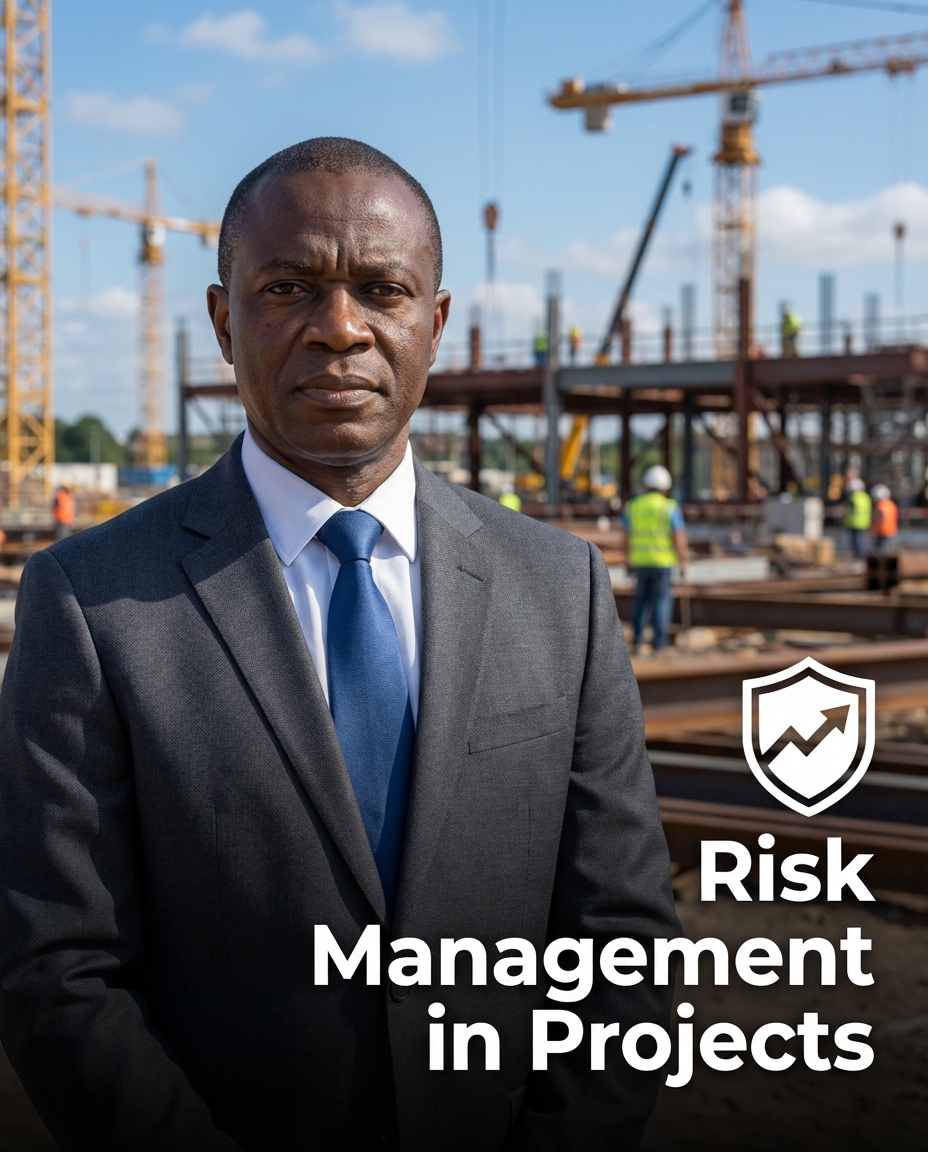
RISK MANAGEMENT IN PROJECT EXECUTION
RATIONALE Projects rarely fail because of bad ideas; they fail because of unmanaged risks. In an environment of uncertainty, the ability to anticipate, assess, and mitigate threats is what separates successful project managers from those who constantly fight fires. Effective project risk management is not just about avoiding problems—it is about seizing opportunities and ensuring predictability in delivery.
Too often, risk management is treated as a checkbox exercise—a register filled out at the start of a project and never looked at again. This negligence leads to budget overruns, missed deadlines, and scope creep. True resilience requires a proactive culture where risk is continuously monitored and managed throughout the project lifecycle.
This training programme equips participants with the mindset and methodologies to handle uncertainty with confidence. It focuses on practical tools for identifying “unknown unknowns” and implementing response strategies that keep projects on track, regardless of the challenges that arise.
OVERALL OBJECTIVES By the end of the programme, participants will be able to:
-
Integrate project risk management principles into every phase of the project lifecycle.
-
Facilitate risk identification workshops to capture comprehensive threat profiles.
-
Perform qualitative and quantitative risk analysis to prioritize issues.
-
Develop robust risk response strategies (Avoid, Transfer, Mitigate, Accept).
-
Monitor and control risks dynamically as the project evolves.
-
Communicate risk exposure effectively to stakeholders and sponsors.
COURSE CONTENT
Day One: The Psychology and Framework of Risk
-
Defining risk: Uncertainty vs. Issue
-
The cultural barriers to effective risk management
-
Standards and frameworks (PMI-RMP, ISO 31000)
-
Planning risk management: Establishing the context
-
Stakeholder risk tolerance and appetite
Day Two: Risk Identification Techniques
-
Moving beyond brainstorming: Delphi technique, SWOT, and Root Cause Analysis
-
Identifying risks in Scope, Schedule, Cost, and Quality
-
The Risk Breakdown Structure (RBS)
-
Analyzing assumptions and constraints
-
Creating a comprehensive Risk Register
Day Three: Risk Analysis and Prioritization
-
Qualitative Analysis: Probability and Impact Matrix
-
Quantitative Analysis: Introduction to Monte Carlo Simulation and Decision Trees
-
Expected Monetary Value (EMV) analysis
-
Prioritizing risks for action
-
Identifying “Watch List” items vs. Critical threats
Day Four: Risk Response Planning
-
Strategies for negative risks (Threats): Avoid, Transfer, Mitigate, Accept
-
Strategies for positive risks (Opportunities): Exploit, Share, Enhance, Accept
-
Developing contingency plans and fallback plans
-
Allocating management reserves and contingency reserves
-
Assigning risk owners and responsibilities
Day Five: Monitoring, Control, and Reporting
-
The risk reassessment process: keeping the register alive
-
Risk audits and technical performance analysis
-
Managing secondary and residual risks
-
Reporting risk status to the C-Suite and Project Board
-
Capstone exercise: End-to-end risk management simulation
METHODOLOGY The training will be delivered using interactive and practice-oriented learning approaches, including:
-
Expert-led presentations on project risk management
-
Interactive risk workshops
-
Case studies of famous project failures (and how risk management could have saved them)
-
Monte Carlo simulation demonstrations
-
Group strategy sessions
TARGET AUDIENCE This programme is suitable for:
-
Project and Program Managers
-
Risk Officers and Compliance Managers
-
Project Team Leads and Engineers
-
Construction and IT Project Leads
-
Business Analysts and Sponsors
MODE OF ASSESSMENT Participants will be assessed through:
-
Creation of a Risk Management Plan
-
Risk analysis case study
-
Defense of risk response strategies
-
Certificates of participation will be issued upon successful completion.
FEES Training fees are charged per participant and are inclusive of:
-
Training materials
-
Resource documentation
-
Certificate of participation
-
Refreshments (where applicable)
-
Detailed fee structure available upon request.
VENUE The programme can be delivered at:
-
AYU GLOBAL–approved training centres
-
Client-designated venues
-
Virtual or hybrid platforms, where applicable
DATE To be scheduled in consultation with participating organizations.
DURATION Five (5) Days
CAPABILITY STATEMENT AYU GLOBAL INTERNATIONAL is a leading management and capacity development consulting firm with expertise in:
-
Project management office (PMO) setup
-
Enterprise risk management (ERM)
-
Governance and compliance
-
Institutional capacity building
-
Strategic leadership and project management
The firm has successfully delivered training and advisory services to government institutions, regulatory agencies, private sector organizations, and development partners.
FACULTY / RESOURCE PERSONS The programme will be facilitated by seasoned professionals with expertise in:
-
Project Risk Management (PMI-RMP)
-
Crisis management and business continuity
-
Decision analysis and statistics
-
Strategic project governance
-
Complex systems engineering
CONCLUSION In a complex world, project risk management is the ultimate insurance policy for your strategic initiatives. This programme ensures that your team is prepared not just to survive uncertainty, but to thrive in it. AYU GLOBAL INTERNATIONAL is your partner in delivering projects with certainty and control.
Instructor

You May Like

AI for Business Decision-Making and Automation
Give your leadership team the power of "super-speed" decision-making. Scale your output without scaling your headcount.
Introduction to Artificial Intelligence and Applications
RATIONALE Artificial Intelligence is the defining technology of the 21st century, impacting every sector from healthcare to finance. Understanding Artificial Intelligence applications is essential for...

Digital Transformation Strategy and Implementation
We cover the roadmap for legacy system migration, digital culture adoption, and customer experience innovation. Transform or die.

Fundamentals of Planning, Research and Data Analysis
FUNDAMENTALS OF PLANNING, RESEARCH AND DATA ANALYSIS RATIONALE In the information age, data is the new currency. However, raw data is useless without the skills...

Applied Research Methods for Decision-Making
This course teaches you the scientific method of business decision-making. Learn how to design surveys, conduct market research, and validate your assumptions before you spend...